
From the Bräustübl · 9 October 2026
The wind pipe phenomenon: naturally chilled beer for centuries
By Bräustübl Kaltenhausen
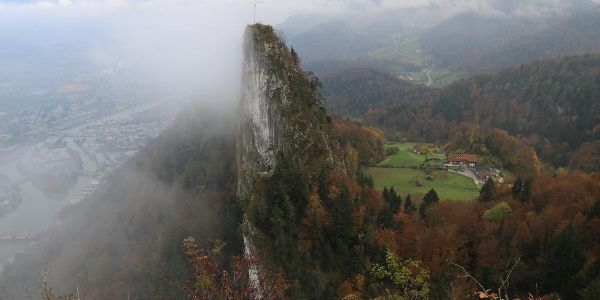
The cellars of Kaltenhausen have always been famous for their cold. A 17th-century chronicle says of one of these cellars that “the cellar is so cold that a fresh drink immediately goes to the teeth”. What seemed like a small miracle back then has a natural explanation, and it is still the reason why the beer at the Bräustübl reaches your glass so fresh.
Cold winds from the rock
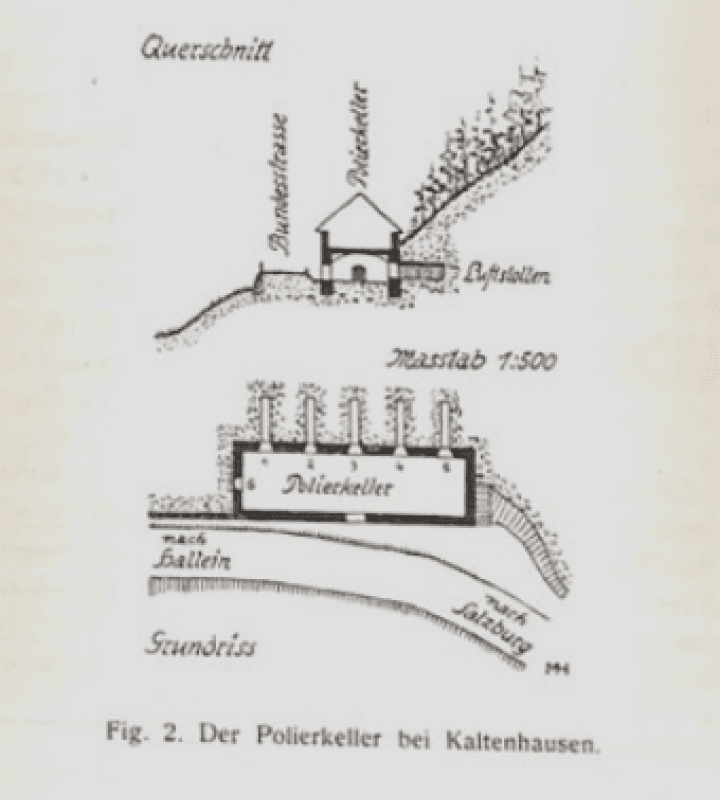
The reason is natural air cooling: cold downdraughts enter the Barmstein rocks through crevices and cracks at the top and exit the mountain again at cellar level. Thanks to this constant flow, the temperature in the cellars stays below 10 °C all year round, in midsummer just as in winter.
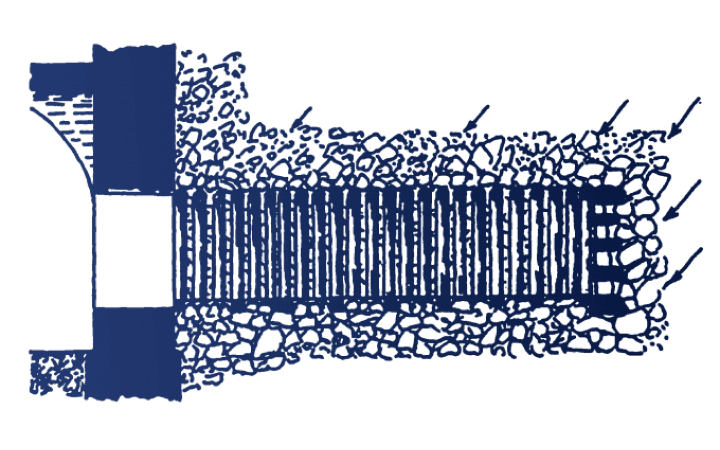
Locals called these air channels “wind pipes”. Historic drawings show how the cold mountain air was led through the rock into the cellars, an air-conditioning system long before electricity existed.
Why brewers needed cold cellars
Beer is a delicate product. Bottom-fermented beers such as Märzen or pilsner ferment and mature at low temperatures, and the finished beer only stays fresh if it is stored cool. Before the first refrigeration machines found their way into breweries in the 19th century, a cold cellar was therefore a brewery's most valuable asset. Many breweries cut ice from ponds and lakes in winter to cool their cellars through the summer. In Kaltenhausen this was not necessary: nature delivered the cold all year round.
Hans Elsenheimer and the “Cold Brewhouse”
These very wind pipes were the reason why Hans Elsenheimer, mayor and merchant of Salzburg, had the “Kaltes Bräuhaus” built at this location in 1475. Added to this was the clear rock spring water at the foot of the Barmstein rocks, the second key ingredient for good beer. Kaltenhausen has since been regarded as the oldest brewery in the province of Salzburg and the oldest wheat beer brewery in Austria. In 1498 the property passed to the Prince-Archbishops of Salzburg, who also appreciated the value of this special location.
The Barmstein rocks: Hallein's “ears”
The two rocks above Kaltenhausen, the Great and the Little Barmstein, are a landmark of Hallein. Locals affectionately call them the “Halleiner Ohrwaschln”, Hallein's ears, and one of our parlours, the Barmstoastüberl, is dedicated to them. Few people know that these striking rocks are not only beautiful to look at but have chilled the beer for centuries.
Still in use today
To this day, all beers tapped at the Bräustübl are stored in one of the last natural rock cellars and reach your glass naturally chilled, entirely without electricity, for more than 550 years. A temperature below 10 °C is exactly the range in which pale beers develop their aroma best: cool and refreshing, but not ice-cold.
Experience it yourself
The best way to taste the difference is right here: a freshly tapped Kaiser beer from the rock cellar with a goulash or a cold-cuts platter in one of our historic parlours. Read which beers we serve in our article Kaiser beer on tap, and more about the house's more than 550-year history on our history page. You can book your table online.
Frequently asked questions
How cold is it in the cellars of Kaltenhausen?
Thanks to the natural air cooling, the temperature stays below 10 °C all year round.
Where does the cold air come from?
Cold downdraughts enter the rock through crevices and cracks at the top of the Barmstein rocks and come out again at cellar level.
Is the beer at the Bräustübl still chilled this way?
Yes. All beers tapped at the Bräustübl are stored in one of the last natural rock cellars and reach your glass naturally chilled.